

Velvet is one of those fabrics that looks effortlessly luxurious until something spills on it, and suddenly you’re staring at a stain wondering if you’ve just ruined the whole thing. The good news is that you probably haven’t. The tricky part is that velvet doesn’t respond well to the same cleaning methods you’d use on cotton or microfiber, so knowing what to do (and what not to do) makes all the difference.
This guide walks you through how to clean a velvet couch safely, step by step, without flattening the pile or leaving water marks behind.
What Makes Velvet So Tricky to Clean
Velvet gets its distinctive soft sheen from a dense layer of cut fibers called the pile. These fibers all stand upright in the same direction, which is what gives the fabric that signature look that changes shade when you stroke it.
The problem is that moisture, pressure, and heat can all cause those fibers to mat down permanently. Once that happens, the fabric looks dull and uneven, and it’s very hard to reverse. That’s why velvet needs a gentler, more deliberate approach than most upholstery fabrics.
Natural vs. Synthetic Velvet: Does It Matter?
Yes, it does. Natural velvet – made from silk or cotton – is more delicate and more vulnerable to water damage. Synthetic velvet, often made from polyester or nylon, is more forgiving and usually easier to clean at home.
Before you do anything, check the care tag on your couch. You’ll typically see one of these codes:
- W – safe to use water-based cleaners
- S – solvent-based cleaners only, no water
- WS – both water and solvent cleaners are acceptable
- X – vacuum or brush only, no liquids
That little code is your roadmap. Ignoring it is how people end up with a bigger mess than the original stain.
Supplies You’ll Need Before You Start
Gathering the right tools before you start saves a lot of back-and-forth and helps you work faster while a stain is still fresh.
Here’s what you’ll want on hand:
- A soft-bristled brush or velvet brush
- A clean white cloth or microfiber towel (avoid colored cloths that might transfer dye)
- A handheld vacuum or upholstery attachment
- Distilled water (tap water can leave mineral marks on velvet)
- Mild dish soap or upholstery cleaner appropriate for your fabric type
- Rubbing alcohol (for certain stain types on synthetic velvet)
- A spray bottle for controlled application
Avoid anything abrasive, including rough sponges, stiff brushes, or paper towels. These can snag and damage the pile.
How to Clean a Velvet Couch: Step-by-Step
Step 1: Vacuum First, Always
Before any liquid touches your couch, run a vacuum over the entire surface using an upholstery attachment. This lifts dust, crumbs, and loose debris that could otherwise get pushed deeper into the fabric when you start cleaning.
Use light, consistent strokes in the direction of the pile – not against it. Going against the grain repeatedly can flatten the fibers over time.
Step 2: Brush the Pile Back Into Shape
After vacuuming, use a soft velvet brush or a clean toothbrush to gently stroke the fabric in the direction of the pile. This restores the nap before you introduce any moisture and helps you spot areas where the pile has already been crushed.
This step takes maybe two minutes and makes a noticeable difference in the final result.
Step 3: Spot Test Any Cleaner
Whatever cleaner you plan to use, test it on a hidden area first – behind a cushion or on the underside of the skirt. Apply a small amount, let it dry, and check for discoloration or texture changes.
Skipping this step is a gamble that rarely works out in your favor, especially with darker or more saturated velvet colors.
Step 4: Treat Stains Carefully
For water-safe velvet (W or WS code), mix a small amount of mild dish soap with distilled water and apply it sparingly with a clean cloth. The goal is to use as little moisture as possible.
Blot the stain – never rub. Rubbing pushes the stain deeper and can mat the fibers in that area permanently. Work from the outside of the stain inward to avoid spreading it.
For S-coded velvet, use a dry-cleaning solvent or rubbing alcohol on a cloth and blot the same way.
Step 5: Rinse Without Over-Wetting
For W- or WS-coded velvet, lightly blot the area with a cloth dampened with plain distilled water to lift any soap residue; follow the solvent manufacturer’s instructions for S-coded velvet. Again, use as little moisture as you can and blot rather than wipe.
Over-wetting velvet is one of the most common mistakes people make. Too much water can cause the backing to warp and the pile to mat, leaving you with a watermark that’s just as obvious as the original stain.
Step 6: Dry Thoroughly and Brush Again
Allow the cleaned area to air dry completely. You can point a fan at the fabric to speed this up, but avoid using heat – no hair dryers, no space heaters, nothing that concentrates heat directly on the velvet.
Once the fabric is dry, use your velvet brush again to lift the pile back up. Brush gently in the direction of the nap. This final step restores the texture and helps the cleaned spot blend back into the rest of the fabric.
How to Remove Specific Stains From a Velvet Couch
Food and Drink Spills
Act fast. The longer a liquid sits in velvet, the deeper it penetrates. Blot up as much of the spill as possible with a clean cloth before doing anything else.
Then follow the spot-cleaning steps above with a mild soap and water solution (if your fabric allows it). For oily food stains, a small amount of dish soap is particularly effective because it’s designed to cut through grease.
Pet Hair and Dander
Pet hair loves velvet. A lint roller can help, but a rubber glove or damp rubber brush works even better for pulling embedded hairs from the pile.
After removing the hair, vacuum the entire surface to get any remaining particles. If your couch has taken on a pet odor, that’s a deeper issue that surface cleaning alone won’t fully resolve. Professional upholstery cleaning – like the kind offered by Peace Frog Specialty Cleaning – can address odors at the source rather than just masking them.
Ink and Marker Stains
These are tough on any fabric, and velvet is no exception. Rubbing alcohol applied with a cotton swab can work on synthetic velvet, but dab gently and blot frequently with a clean cloth to lift the ink rather than spread it.
On natural velvet, it’s often safer to call a professional before attempting anything yourself. The fibers are more vulnerable, and DIY attempts on ink stains can sometimes set them permanently.
Grease and Oil
Sprinkle a small amount of baking soda or cornstarch on the stain and let it sit for 15 to 20 minutes to absorb the oil. Then vacuum it off gently before applying any cleaner.
This absorption step is key with oil-based stains because introducing liquid first can actually cause the grease to spread rather than lift.
Common Mistakes That Damage Velvet
It’s worth pausing here to call out the things people do with the best intentions that end up making velvet worse.
Rubbing instead of blotting is probably the most common error. It’s an instinct – when something is wet, we want to wipe it up – but rubbing drags the fibers out of alignment and can create a rough, matted patch that’s hard to fix.
Using too much water is another frequent misstep, especially with steam or spray-heavy cleaning methods. Velvet absorbs moisture unevenly, which can leave tide marks around the treated area.
Putting velvet cushion covers in the washing machine is tempting but risky, even if the care tag suggests it’s possible. The agitation and heat can crush and distort the pile significantly. If washing is necessary, hand washing in cold water with minimal agitation is a much safer approach.
How Often Should You Clean a Velvet Couch?
For routine maintenance, vacuuming and brushing once a week is enough to keep velvet looking its best. This prevents buildup from embedding into the pile and reduces the amount of deep cleaning needed over time.
For spot cleaning, treat stains as soon as they happen. The longer you wait, the harder they are to remove.
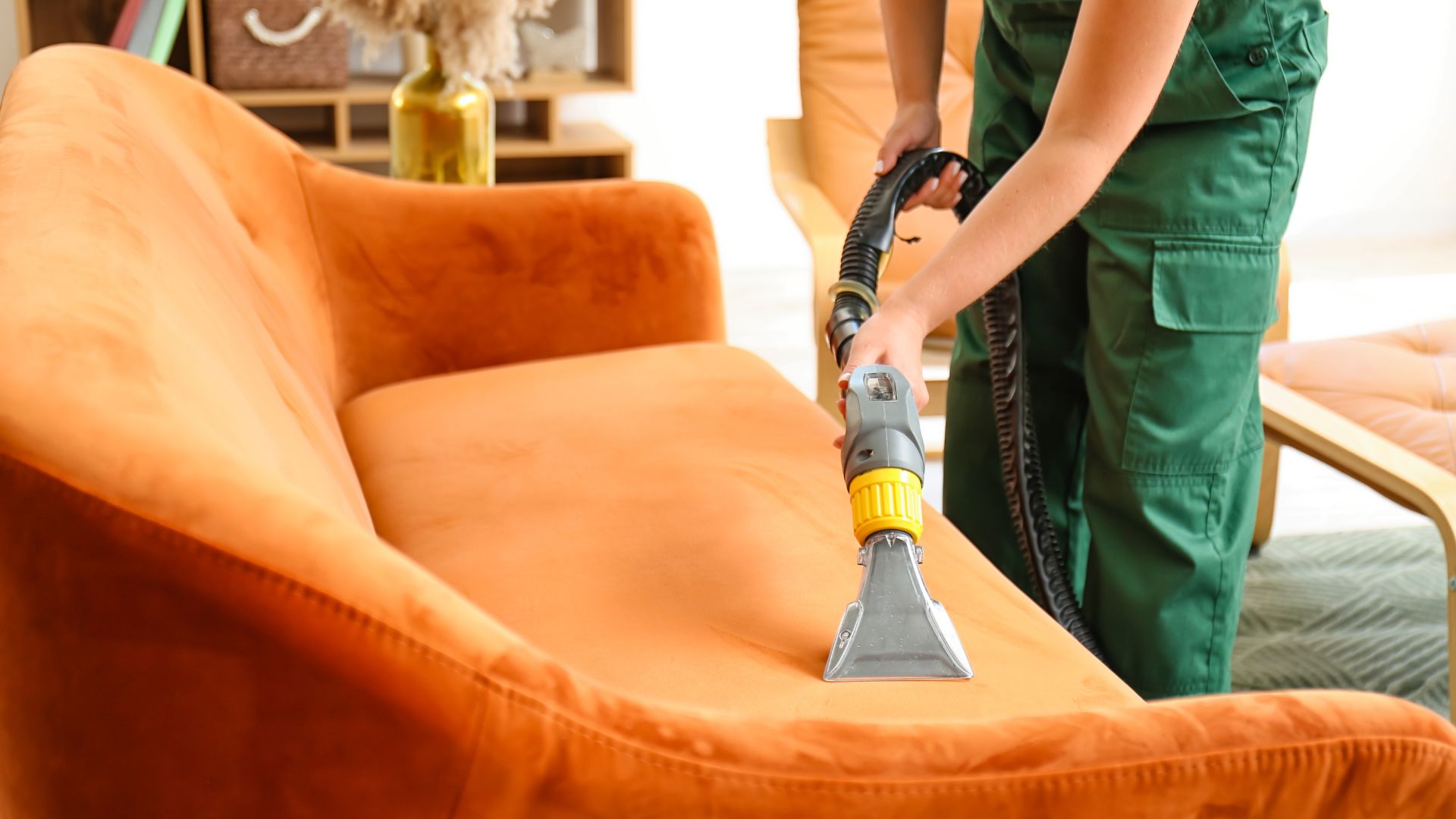
For a full professional cleaning, once a year is a reasonable target for most households – more often if you have pets or children. Professional upholstery cleaning uses equipment and techniques specifically designed to handle delicate fabrics without crushing the pile or over-wetting the fabric.
When to Call a Professional for Velvet Upholstery Cleaning
Some situations genuinely call for expert help. If your velvet couch has widespread soiling, persistent odors, or stains that have already dried and set, DIY methods are unlikely to do much good and could cause additional damage.
Velvet is also one of those fabrics where the wrong move – using the wrong cleaner, applying too much pressure, or introducing too much moisture – can leave permanent damage. That’s not a risk worth taking with a piece of furniture you’ve invested in.
Peace Frog Specialty Cleaning offers professional upholstery cleaning in Austin and the surrounding areas using methods that are safe for delicate fabrics and free of harsh chemicals. The team is trained to work with a wide range of fabric types, including velvet, and uses an approach designed to protect the pile rather than flatten it.
Keeping Your Velvet Couch Looking Great Between Cleanings
Prevention is easier than cleaning. A few simple habits can extend the time between deep cleans and reduce the chance of a stain becoming a permanent fixture on your couch.
Rotate and fluff your cushions regularly to prevent uneven wear in high-traffic areas. Keep velvet furniture out of direct sunlight, which can fade the color and weaken the fibers over time. If you have pets, a removable cover or throw can protect the surface without hiding the couch’s good looks entirely.
Using a fabric protector spray formulated for velvet can also help. It creates a light barrier that makes spills bead up rather than soak in immediately, giving you a few extra seconds to blot before the stain sets.
FAQs About Cleaning a Velvet Couch
Can I use a steam cleaner on velvet?
Generally, no – at least not without professional guidance. Steam introduces concentrated heat and moisture directly into the pile, which can cause matting and distortion. Some professional-grade equipment is designed to handle velvet safely, but home steam cleaners are usually too aggressive for this fabric type.
What’s the best way to revive crushed velvet?
Avoid using a steamer or kettle on velvet unless the care label specifically permits it or a professional recommends it. This can help with minor crushing but won’t fix severe or long-term matting.
Is velvet a good choice for homes with kids or pets?
It can be, especially synthetic velvet, which is more durable and easier to clean. That said, it does require more maintenance than most upholstery fabrics. If you love the look of velvet but want something more forgiving, performance velvet – designed specifically for high-traffic households – is worth looking into.
Can I use baking soda to deodorize a velvet couch?
Yes, with care. Sprinkle a light layer over the fabric, let it sit for 15 to 20 minutes, then vacuum it off using an upholstery attachment on a low setting. Avoid grinding the baking soda into the pile and make sure to vacuum thoroughly so no residue is left behind.
How do I know if my velvet couch needs professional cleaning?
If routine vacuuming and spot treatments aren’t improving the appearance, if odors persist, or if stains cover a large portion of the fabric, it’s time to bring in a professional. Attempting to deep clean velvet without the right equipment and experience often does more harm than good.
Keep Your Velvet Couch Clean Without Crushing the Pile
Velvet is worth the extra care it takes. Knowing how to clean a velvet couch properly – using the right tools, the right technique, and a light touch – keeps the fabric looking rich and soft for years. For everyday maintenance, vacuuming and brushing go a long way.
For tougher situations, don’t hesitate to get professional help before a small stain becomes a permanent problem. If your velvet couch needs more than a DIY fix can offer, explore Peace Frog’s upholstery cleaning service or call 512-259-6606 to schedule a visit.