

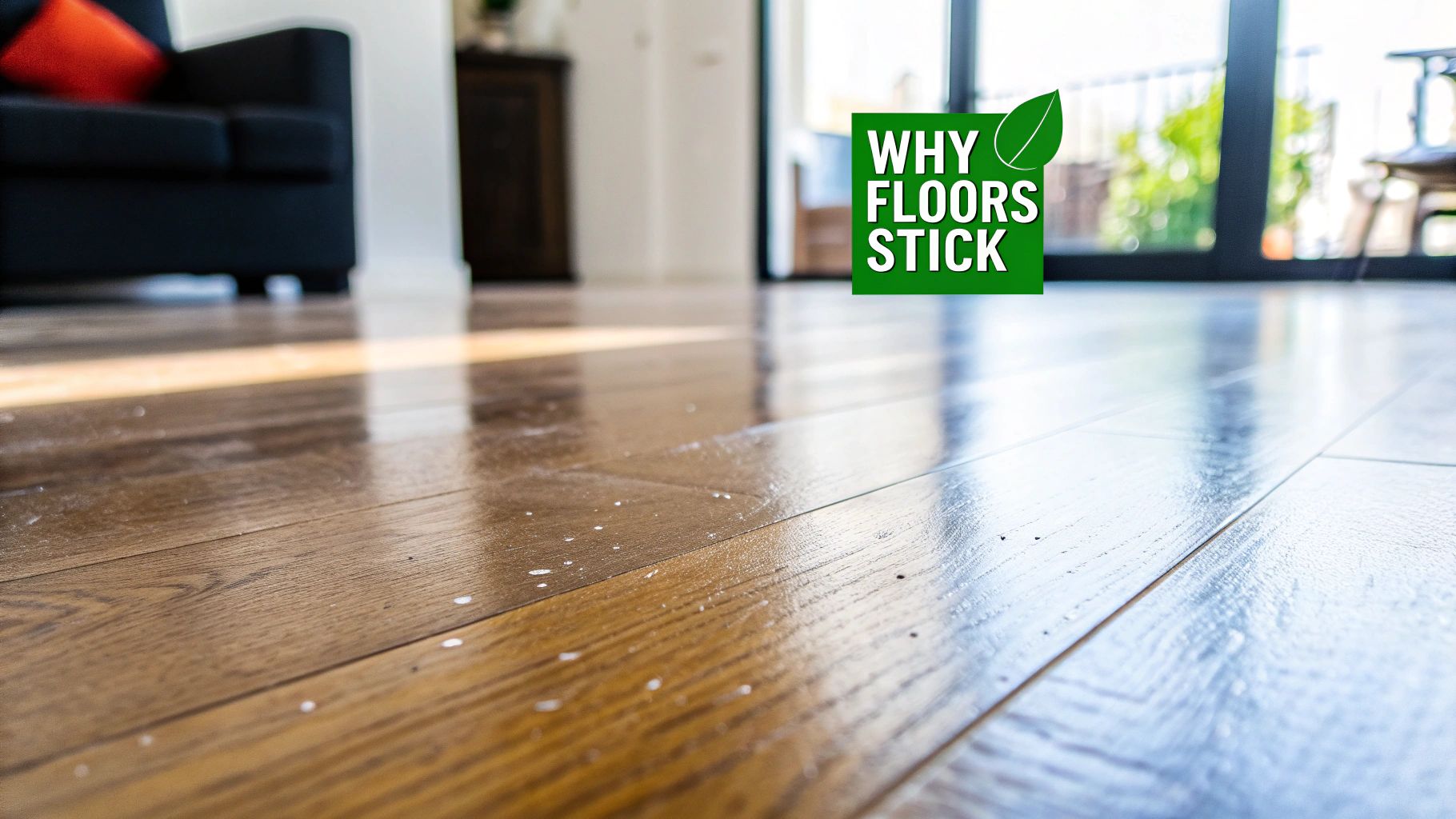
That sticky, tacky feeling you get when walking across your hardwood floors is a frustratingly common problem, especially for homeowners here in Austin. The culprit is almost always the same: a buildup of cleaning product residue. It’s a strange irony—the very soaps and polishes you trust to make your floors shine are often what’s creating that sticky film that attracts dirt like a magnet. At Peace Frog Specialty Cleaning, we’ve seen it all, and we’re here to help you get your floors back to their beautiful, smooth state.
So, Why Do My Hardwood Floors Feel Sticky?
You spend time mopping, expecting a pristine, clean surface, only to find it feels stickier than when you started. This usually happens for a couple of key reasons. Either the cleaning solution wasn’t completely rinsed off, or the product simply wasn’t right for your sealed hardwood in the first place.
Many household cleaners, especially those all-purpose soaps or oil-based polishes, are notorious for leaving behind a residue that never truly dries. This leftover film then becomes a trap. Dust floating in the air, dirt tracked in on shoes from a walk around Lady Bird Lake, and pet dander all get stuck, creating a dull, tacky layer that completely hides your floor’s natural beauty. With each cleaning, you might just be adding another layer to the problem, making it progressively worse over time.
Pinpointing the Source of the Gunk
Before you can fix the problem, you need to know exactly what you’re dealing with. That sticky situation on your floors can almost always be traced back to one of these common mistakes.
Figuring out the “why” behind your sticky floors is the first step toward getting them back to their smooth, beautiful state. This quick table breaks down the usual suspects.
Identifying the Cause of Your Sticky Floors
| Common Culprit | How It Creates Stickiness | First Step to Fix |
|---|---|---|
| Using the Wrong Cleaner | Many popular floor cleaners contain waxes, acrylic polishes, or oils that leave behind a sticky film instead of cleaning the surface. | Switch to a pH-neutral cleaner specifically designed for sealed hardwood. |
| Too Much Cleaning Solution | When you use more cleaner than the instructions recommend, it becomes almost impossible to rinse away completely, leaving residue behind. | Dilute the cleaner properly and use it sparingly. A little goes a long way. |
| Dirty Mop or Water | Reusing dirty water or a soiled mop head just moves grime and old soap around, spreading a thin, tacky layer across the floor. | Always start with a clean mop head and fresh water for every cleaning session. |
Once you’ve identified the likely cause, you can stop the cycle and start working on a solution instead of accidentally adding to the buildup.
Hardwood floors are a huge selling point in homes across Austin, Cedar Park, and Leander for a reason. They’re beautiful and add incredible value. In fact, the global hardwood flooring market was valued at USD 51.38 billion in 2024, a testament to its enduring appeal. This has naturally led to a flood of cleaning products on the market, but as we’ve seen, not all of them are right for the job. You can find more insights on the hardwood flooring market to see just how big this industry is.
Here’s what our Peace Frog Specialty Cleaning technicians tell our clients: The stickiness on your hardwood isn’t a sign that the floor is dirty. It’s a sign that it has a layer of old cleaner on it attracting new dirt. The solution isn’t to clean more—it’s to clean smarter by getting rid of that buildup first.
Getting Your Cleaning Kit Ready
Before you even think about tackling that sticky mess, let’s talk tools. Getting this part right is crucial for protecting your hardwood floors. The good news? You don’t need a cabinet full of harsh chemicals to get the job done. Most sticky spots, whether from a juice box spill in a family home or just daily grime, can be handled with a few simple, gentle items you probably already own.
The absolute hero of your cleaning toolkit will be a high-quality microfiber mop. Our technicians have seen firsthand how traditional mops just slosh dirty water around, which is a disaster for wood. A microfiber pad, on the other hand, grabs onto dirt and gives you total control over how much water you’re using. This is key to preventing moisture from seeping between the floorboards and causing that dreaded warping over time.
Choosing Your Cleaner (And What to Skip)
When it comes to the cleaning solution itself, simple is almost always better. All you really need are two basic ingredients: warm water and a tiny bit of the right soap.
- Your Best Bet for a DIY Solution: Grab a gallon of warm water and add just a couple of drops of a mild, pH-neutral dish soap. That’s it. This combo is surprisingly effective at cutting through sticky residues without damaging your floor’s protective finish.
- Cleaners to Avoid at All Costs: Ironically, the most common culprit behind sticky floors is the cleaner itself. Steer clear of oil soaps, wax-based polishes, and any generic all-purpose cleaners. These are notorious for leaving behind a dull, sticky film that just attracts more dirt.
To really get this right, you’ll want to have some microfiber cloths and a solid grasp of understanding the benefits of neutral pH cleaners and appropriate cleaning tools.
A Quick Tip from the Pros: Use two buckets. One for your cleaning solution, and one filled with clean water just for rinsing the mop pad. This simple step stops you from putting dirty, soapy water right back onto the floor. You’ll be lifting the gunk up and away, not just smearing it around.
Tackling Stubborn Floor Residue the Right Way
Now that you’ve got your simple, safe toolkit assembled, it’s time to get that sticky gunk off your floors for good. The process itself isn’t complicated, but the order of operations is what really matters for protecting your hardwood and getting that perfectly smooth, clean finish you’re after.
The first thing you absolutely must do is a thorough dry clean. Before any water touches that floor, grab a soft-bristled broom or a vacuum with a hardwood floor attachment and clear away all the loose debris. Think of it this way—any stray dirt, dust bunnies, or pet hair can act like sandpaper under a mop, potentially scratching the life out of your beautiful finish.
The Art of the Damp Mop
With a clear surface to work on, you can now bring in the mop. The key word here is “damp,” not “wet.” Hardwood floors and standing water are sworn enemies. Too much moisture can easily seep between the boards and cause warping or other permanent damage.
Wring your microfiber mop head out until it feels just slightly damp. Then, working in small, manageable sections, always mop in the same direction as the wood grain. This helps you lift the sticky residue effectively without pushing excess water into the seams of the floorboards.
This infographic breaks down the simple but essential tools for a safe and effective clean.
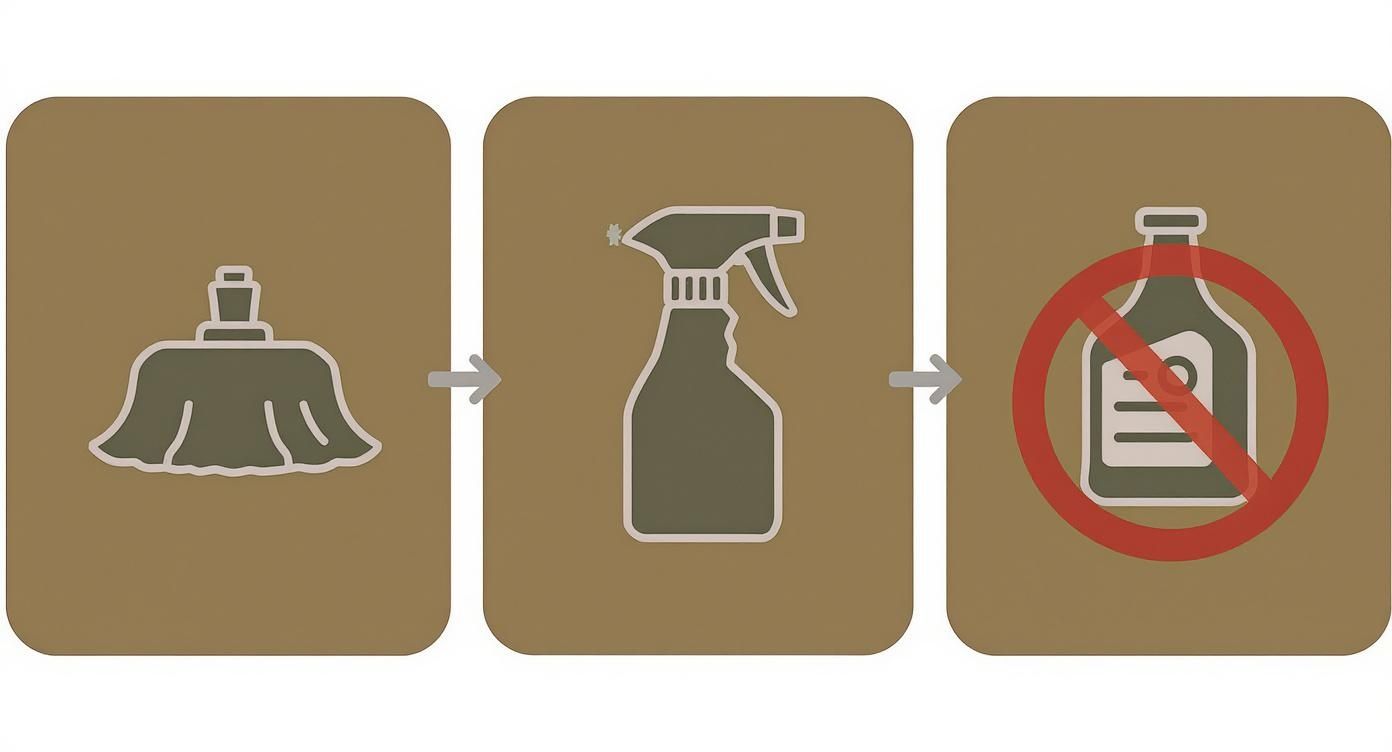
As you can see, the right combination of a microfiber mop and a proper cleaning solution is the winning ticket. It also calls out common culprits, like oil-based soaps, that often cause the sticky buildup in the first place.
For those extra-stubborn spots—maybe where a soda was spilled or some tape was left behind—you’ll need to apply a little more targeted pressure.
- Spray a small amount of your cleaning solution directly onto a clean microfiber cloth.
- Gently rub the tacky spot, working with the grain.
- The combination of the cleaner and the cloth’s light friction should be enough to break down and lift the residue without any harsh scrubbing.
Key Takeaway: The final step is just as critical as the first. Always dry the floor completely. Go back over any damp spots with a clean, dry microfiber towel. This simple action prevents water spots from forming and protects the wood, leaving behind nothing but a clean, non-sticky shine.
If you’re dealing with years of buildup from improper cleaners, sometimes a DIY approach just won’t cut it. That’s when calling in a professional can make all the difference. For those in the Austin, Georgetown, and Westlake areas, Peace Frog Specialty Cleaning provides expert hardwood floor cleaning that can safely strip away deep-seated residue and restore your floor’s original beauty.
When It’s Time to Call in a Professional Floor Cleaning Expert
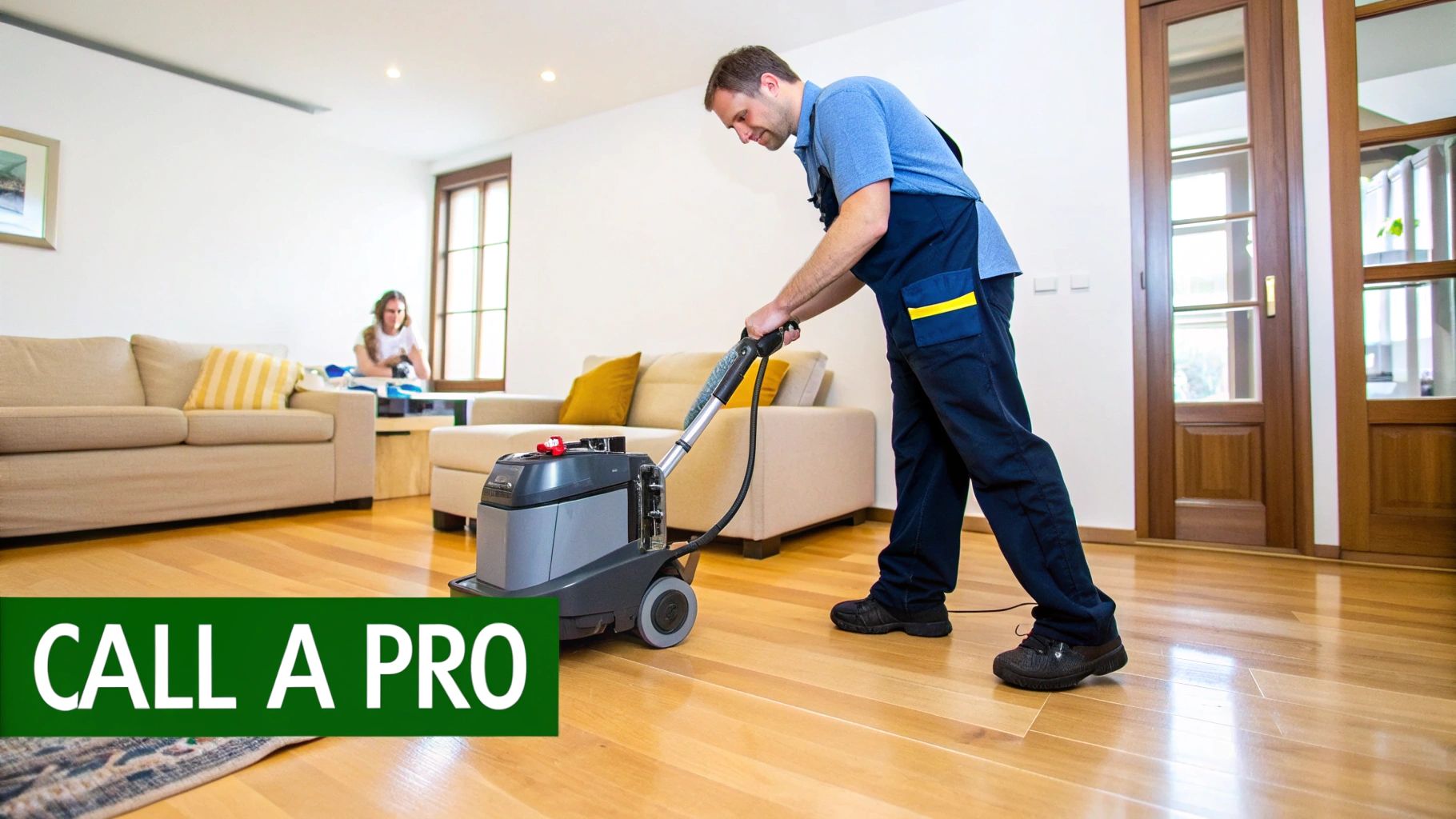
Let’s be honest, sometimes you can scrub and scrub, but that sticky film on your hardwood floors just refuses to disappear. This is a common headache, especially when years of wax-based polishes or the wrong cleaning products have created a stubborn, deep-seated layer of gunk. If your best DIY efforts aren’t cutting it, that’s a sure sign it’s time to bring in some professional muscle.
For many homeowners we’ve worked with in Georgetown and Westlake, the decision comes down to protecting their investment. It’s tempting to keep trying harsher chemicals or more abrasive tools, but that path often leads to accidentally damaging the floor’s delicate finish—and a much bigger, more expensive problem. This is exactly where you draw the line between a weekend project and a job for a seasoned pro.
The Peace Frog Specialty Cleaning Difference
At Peace Frog Specialty Cleaning, our highly trained, punctual, and courteous technicians do more than just clean; we restore your floors. We come equipped with specialized, powerful equipment specifically designed to dissolve and lift away layers of residue that have practically bonded to your floor’s surface. Our process extracts the grime without oversaturating the wood, a critical step that’s nearly impossible to get right with a standard mop and bucket. We are fully insured with $1M liability coverage, so you can trust us in your home.
For those bigger jobs, understanding the costs of DIY vs. professional handyman services can really put the value of expert help into perspective. When it comes to the long-term health and beauty of your hardwood, professional care is truly invaluable.
We deliver a deep clean that home methods simply can’t match, and we do it in a way that’s completely safe for your floors, your family, and your pets. Plus, every job is backed by our Peace of Mind Promise, so you know you’re getting exceptional service.
We know life gets busy. For homeowners across Austin, Cedar Park, and Round Rock, knowing when to hand off a tough job to a trusted, locally owned company brings peace of mind. We handle the deep-seated stickiness so you can get back to enjoying your beautiful, clean home.
If your floors feel perpetually tacky no matter what you try, it’s time to let the experts take over. You can easily see our real-time availability and schedule your professional hardwood floor cleaning online to finally bring back your floor’s natural luster.
Keeping Your Hardwood Floors Clean and Residue-Free
Once you’ve brought that beautiful, smooth finish back to life, the real trick is keeping it that way. The secret isn’t some complicated process; it’s all about building a simple, consistent routine. For homeowners here in Austin and the surrounding Central Texas communities, a little proactive care makes a world of difference in preserving your hardwood.
Your best defense starts right at the door. We always tell people to invest in good-quality doormats for every entrance. They act as the first line of defense, catching the dirt, pollen, and gunk that would otherwise get tracked all over your floors. It also pays to be quick on the draw with spills—wiping them up immediately prevents sugary or oily messes from drying into that stubborn, sticky film we all hate.
Choosing the Right Maintenance Products
To maintain that clean, residue-free shine, you have to be picky about what you use for daily cleaning. Stick with a pH-neutral cleaner made specifically for hardwood floors. This is non-negotiable. Using anything else can leave behind a dulling film or, worse, damage the finish over time.
It’s clear that homeowners are getting more savvy about this. The market for floor cleaners is expected to hit USD 9.41 billion by 2033, which shows a huge shift toward using the right products for the job. You can dig into the trends in floor care products yourself to see just how much this space is growing.
Of course, a clean home is more than just sparkling floors. Think about your area rugs—they’re magnets for dust and allergens that eventually find their way onto your hardwood.
Peace Frog’s Pro Tip: Look at your home as a whole system. Peace Frog Area Rug Cleaning offers a professional Area Rug & Oriental Rug Cleaning service at our dedicated facility that gets the deep-down dirt out of your rugs. It’s a great complementary service because it drastically cuts down on the debris that gets transferred back onto your hardwood, keeping the entire home cleaner.
This big-picture approach to a healthy home doesn’t stop at surfaces. For a comprehensive clean that truly improves your home’s environment, it’s worth looking into professional disinfecting and sanitization services for your home.
Have Questions About Sticky Hardwood Floors? You’re Not Alone.
When you’re faced with a stubborn sticky mess on your beautiful hardwood floors, it’s natural to have a few questions. Over the years, our friendly technicians have heard just about everything from our clients across Austin, Cedar Park, and Leander. Here are a few of the most common ones we tackle.
Can a Steam Mop Get Rid of the Stickiness?
This is a big one, and our answer is always a firm no. We strongly advise keeping steam mops far away from any hardwood floors.
The intense combination of heat and moisture from a steam cleaner can work its way right through your floor’s protective finish. Once that happens, you’re looking at potential warping, swelling, and other permanent damage. While it might seem like a powerful solution for sticky spots, the risk just isn’t worth it. A slightly damp microfiber mop is a much safer, and still very effective, bet for your home’s flooring.
How Often Do My Hardwood Floors Need a Professional Cleaning?
For the typical home here in the Austin area, bringing in a professional team like Peace Frog Specialty Cleaning every 12 to 18 months is a great rule of thumb.
However, if you’ve got a busy household with kids, pets, or a lot of foot traffic, you’ll probably want to bump that up to once a year. Our professional service is designed to get rid of the deep-down dirt and stubborn residue that regular mopping simply leaves behind, bringing back that original shine you love.
Our Expert Take: That sticky film is the real culprit behind a dull-looking floor. It acts like a magnet for dirt and grime, which scatters light and hides the wood’s natural beauty. Removing it correctly is what lets the finish shine through again.
Will Getting the Sticky Residue Off Ruin My Floor’s Finish?
Quite the opposite, actually! When you remove the residue the right way, you’re revealing the floor’s original shine, not stripping it away.
Using a gentle, pH-neutral cleaner is key. It lifts the sticky layer without harming the finish underneath. The only real danger of dulling your floors comes from using harsh, acidic chemicals or abrasive scrubbing pads, which is exactly what we always tell people to avoid. Our entire professional cleaning process is built to enhance your floor’s luster by safely clearing away all that built-up gunk, not by adding a temporary, artificial polish.
Sometimes, to get a floor that feels as clean as it looks, you just need an expert’s touch. As a trusted, locally owned company serving Austin, Round Rock, Georgetown, and Westlake, Peace Frog Specialty Cleaning has the professional equipment and know-how to safely get rid of that stubborn residue and restore your hardwood’s natural character.
Ready for floors you can truly be proud of again? Learn more about how we can help and Schedule your hardwood floor cleaning online today!