
Area rugs do a lot of quiet work. They anchor furniture, soften hard floors, and absorb the daily foot traffic of everyone who walks through your home. But all that daily use comes at a cost, and most homeowners underestimate how much dirt, allergens, and debris an area rug can hold before it starts to look or smell noticeably dirty.
So how often should area rugs be cleaned? The honest answer is at least twice a year, and sometimes more often depending on your household. Here is what you need to know to make the right call for your rugs.
Why Twice a Year Is the Baseline, Not the Maximum
The “twice a year” recommendation is not arbitrary. It reflects how quickly rugs accumulate what cleaning professionals call dry soil – the fine particles of dirt, dust, dead skin cells, and other debris that settle deep into rug fibers over time.
Vacuuming helps, but it only removes surface-level buildup. The gritty particles that work their way down to the base of the rug fibers act like sandpaper, slowly breaking down the material from the inside out. Professional cleaning gets to that deeper layer, extending the life of the rug while improving the air quality in your home.
Twice a year keeps that cycle in check. It is enough to prevent serious buildup without being so frequent that it feels like a burden.
Factors That Could Mean You Need More Frequent Rug Cleaning
The twice-a-year baseline works well for a moderate household. But several common situations call for a more aggressive cleaning schedule.
Pets Living in the Home
If you have dogs or cats, you already know that rugs become a magnet for pet hair, dander, tracked-in dirt, and the occasional accident. Pet dander alone is a significant allergen that becomes embedded deep in rug fibers well beyond what a vacuum can reach.
For pet owners, quarterly cleaning – about every three months – is a reasonable target. If your pet has had any accidents on or near the rug, that cleaning should happen sooner rather than later. Odors from pet urine can penetrate rug fibers and even the padding beneath, so prompt treatment makes a real difference.
Allergies or Asthma in the Household
Area rugs can trap pollen, dust mites, mold spores, and pet dander. For someone managing allergies or asthma, that buildup is not just unpleasant – it can directly affect their breathing and overall health.
If anyone in your home deals with respiratory sensitivities, cleaning your area rugs three to four times per year may be worth the investment. It is one of the more impactful changes you can make for indoor air quality without a major renovation.
High-Traffic Placement
A rug sitting under a coffee table in a rarely used formal room gets far less wear than one placed at a front entryway, in a hallway, or under a kitchen table. The more foot traffic a rug sees, the faster soil accumulates and works its way into the fibers.
Rugs in high-traffic areas deserve more frequent attention, ideally every three to four months. Rugs in lower-traffic spaces can likely stick closer to the twice-a-year schedule without issue.
Homes with Young Children
Kids bring energy, creativity, and an impressive ability to spill things on soft surfaces. Food particles, juice, crayon wax, and tracked-in mud can all find their way into rug fibers quickly.
Homes with young children often benefit from cleaning area rugs three to four times a year, particularly rugs in playrooms or main living spaces where kids spend most of their time.
Light-Colored or Delicate Rugs
Lighter rugs show soiling more visibly, which can make it tempting to clean them as soon as they look dingy. But beyond appearances, light-colored rugs also show wear and staining faster, meaning professional cleaning on a tighter schedule – three times a year – helps maintain their look and structural integrity.
Delicate rugs made from wool, silk, or other natural fibers require extra care. These materials can be damaged by improper cleaning methods, so it is important to have them handled by professionals with experience in area rug cleaning specifically.
What Happens When Area Rugs Go Too Long Without Cleaning
Skipping professional cleaning for a year or more is one of the most common mistakes homeowners make. The rug may not look dramatically different from the outside, but the buildup happening inside the fibers tells a different story.
Over time, deeply embedded soil grinds away at fiber structure, causing rugs to look matted and worn. Allergens build up to levels that affect indoor air quality in a noticeable way. Odors from tracked-in debris, pet activity, or moisture can become harder to eliminate the longer they sit untreated.
In some cases, a rug that has gone too long without cleaning will not fully recover, even after professional treatment. Regular maintenance is simply less expensive and more effective than trying to rescue a neglected rug.
Does Regular Vacuuming Replace Professional Cleaning?
This is one of the most common questions, and the short answer is no – but that does not mean vacuuming is not valuable.
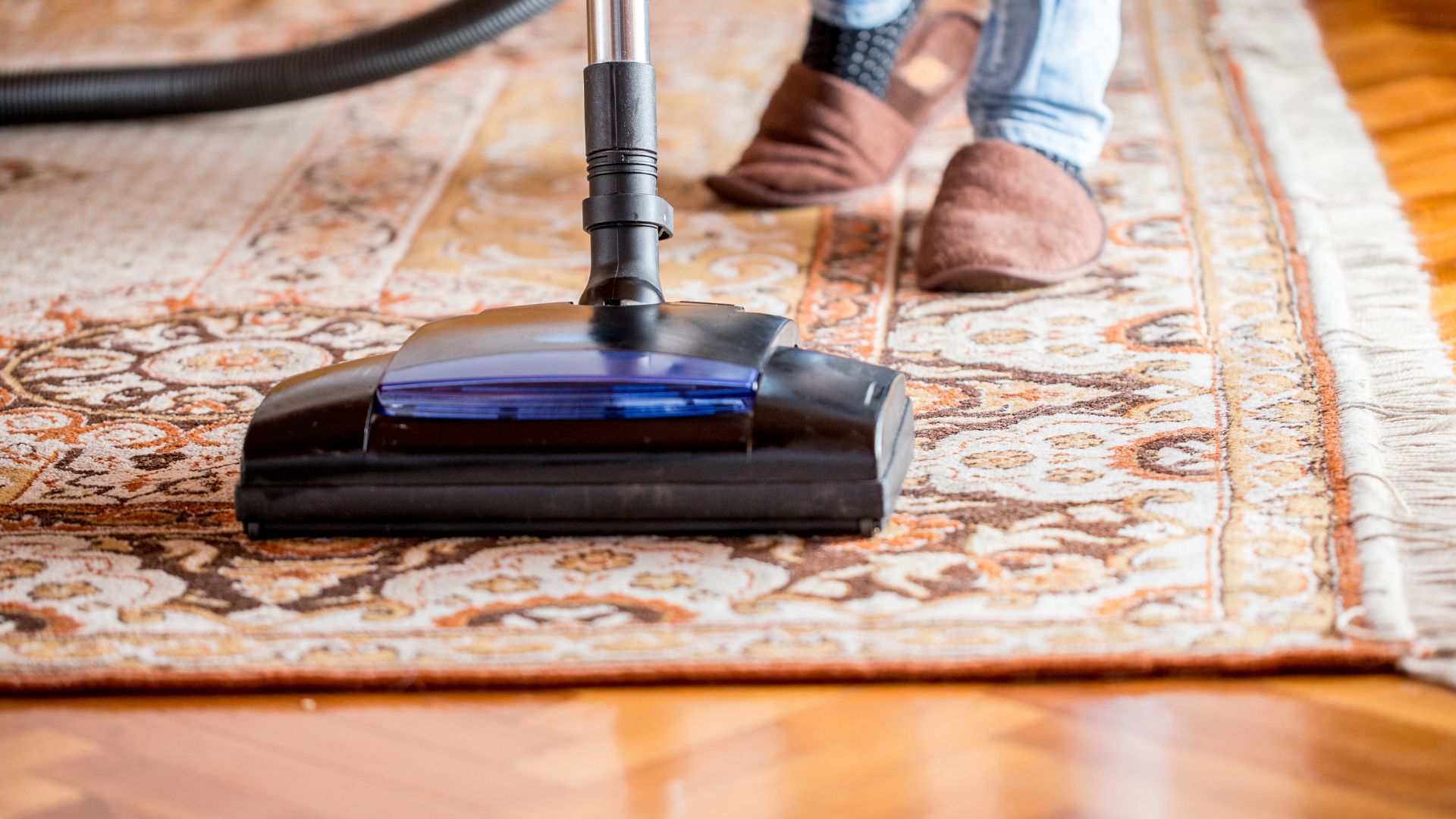
Vacuuming your area rugs one to two times per week is genuinely helpful. It removes surface-level dirt and debris before it has a chance to work its way deeper into the fibers. It also reduces the amount of allergens sitting on the rug surface and helps the rug maintain its appearance between professional cleanings.
Think of vacuuming as ongoing maintenance and professional cleaning as a reset. Both matter, and neither replaces the other.
A Few Vacuuming Tips Worth Knowing
Using the right vacuum settings and attachments makes a difference, particularly for rugs with longer pile or delicate construction. For thick rugs, a beater bar attachment can help loosen embedded debris. For delicate or antique rugs, a suction-only setting is safer on the fibers.
If your rug has fringe, vacuum toward the rug rather than over the fringe itself to avoid snagging and damage.
How Professional Area Rug Cleaning Actually Works
It helps to understand what professional area rug cleaning involves, especially if you have only had your wall-to-wall carpet cleaned and are wondering whether it is the same process.
Area rugs are typically cleaned differently from installed carpet. Many cleaning professionals prefer to clean area rugs off-site, where the rug can be fully saturated, properly agitated, and rinsed without concern for damaging the floor beneath. Some rugs, particularly large or delicate ones, benefit from this method.
At Peace Frog Specialty Cleaning, the approach to area rug cleaning is thorough and mindful of the material being treated. Earth-friendly cleaning solutions and careful technique are part of the process, and the goal is always to get the rug genuinely clean without causing damage in the process.
Choosing the Right Cleaning Method for Your Rug Type
Not every rug can be cleaned the same way, and knowing your rug’s material helps inform the best cleaning approach.
- Synthetic rugs (nylon, polyester, olefin) are generally the most durable and tolerant of deep cleaning. They respond well to steam cleaning and are less prone to shrinkage or color bleeding.
- Wool rugs are more sensitive. Wool can shrink or felt if exposed to too much heat or agitation. Professional cleaners with experience in natural fiber rugs know how to handle these without causing damage.
- Silk and viscose rugs are among the most delicate and are easily damaged by water or improper agitation. These should always be handled by professionals familiar with their specific care requirements.
- Handmade and antique rugs often have natural dyes that can bleed if not tested and treated carefully. These are not candidates for DIY cleaning.
If you are unsure what your rug is made from, a reputable cleaning professional can assess the material before recommending a method.
Signs Your Area Rug Needs Cleaning Now, Regardless of Schedule
Sometimes a rug does not wait for a scheduled cleaning. A few clear signals that it is time to book an appointment sooner rather than later:
- A noticeable odor that does not go away after airing out the rug
- Visible staining that vacuuming has not addressed
- Increased allergy symptoms in household members
- A dull, matted appearance even after vacuuming
- A pet accident that was not fully treated when it happened
- The rug has not been professionally cleaned in over 12 months
If any of these apply, do not wait for your next scheduled cleaning. The sooner a stain or odor is treated, the better the outcome.
The Cost of Neglect Versus the Cost of Maintenance
There is a natural tendency to put off cleaning costs, especially when a rug looks acceptable on the surface. But the long-term math usually favors regular maintenance.
A quality area rug is an investment. Replacing a well-made rug because it has been allowed to deteriorate costs significantly more than maintaining it with professional cleaning every six months. The abrasive soil that builds up in neglected rugs shortens fiber life, and once that damage is done, it cannot be reversed.
Twice-a-year professional cleaning is genuinely one of the more cost-effective decisions a homeowner can make for their flooring.
Frequently Asked Questions About Area Rug Cleaning
Can I clean my area rug at home?
Small, synthetic area rugs can often be hand-washed or machine-washed, but larger or more delicate rugs should be left to professionals. The risk of improper cleaning – including shrinkage, color bleeding, or fiber damage – is real, particularly with wool, silk, or handmade rugs.
How long does it take for an area rug to dry after professional cleaning?
Drying time depends on the cleaning method used, the rug’s material, and airflow in your space. Most rugs dry within 6 to 12 hours in a well-ventilated area. Some methods result in faster drying times than others.
Should I clean my area rug before or after moving into a new home?
Before is ideal if the rug is coming from another space. If you are inheriting rugs left in a home you are moving into, cleaning them before you settle in is a smart step, since you have no way of knowing their cleaning history.
Is professional area rug cleaning safe for kids and pets?
It depends on the products used. Peace Frog Specialty Cleaning uses earth-friendly, non-toxic solutions designed to be safe for households with children and pets. If you have specific concerns, ask your cleaning provider what products they use before scheduling.
How do I maintain my rug between professional cleanings?
Vacuum regularly, address spills immediately by blotting rather than rubbing, rotate the rug every six months to distribute wear evenly, and use a rug pad to reduce slipping and fiber compression.
Keep Your Area Rugs Cleaner for Longer
The answer to how often area rugs should be cleaned is straightforward: at least twice a year, with more frequent cleaning for homes with pets, children, allergies, or heavy foot traffic. Regular professional cleaning protects your investment, improves indoor air quality, and keeps your rugs looking their best for years to come. If your rugs are overdue, there is no better time to schedule than now. Learn more about what professional area rug cleaning looks like, or call Peace Frog Specialty Cleaning at 512-259-6606 to book your appointment.