

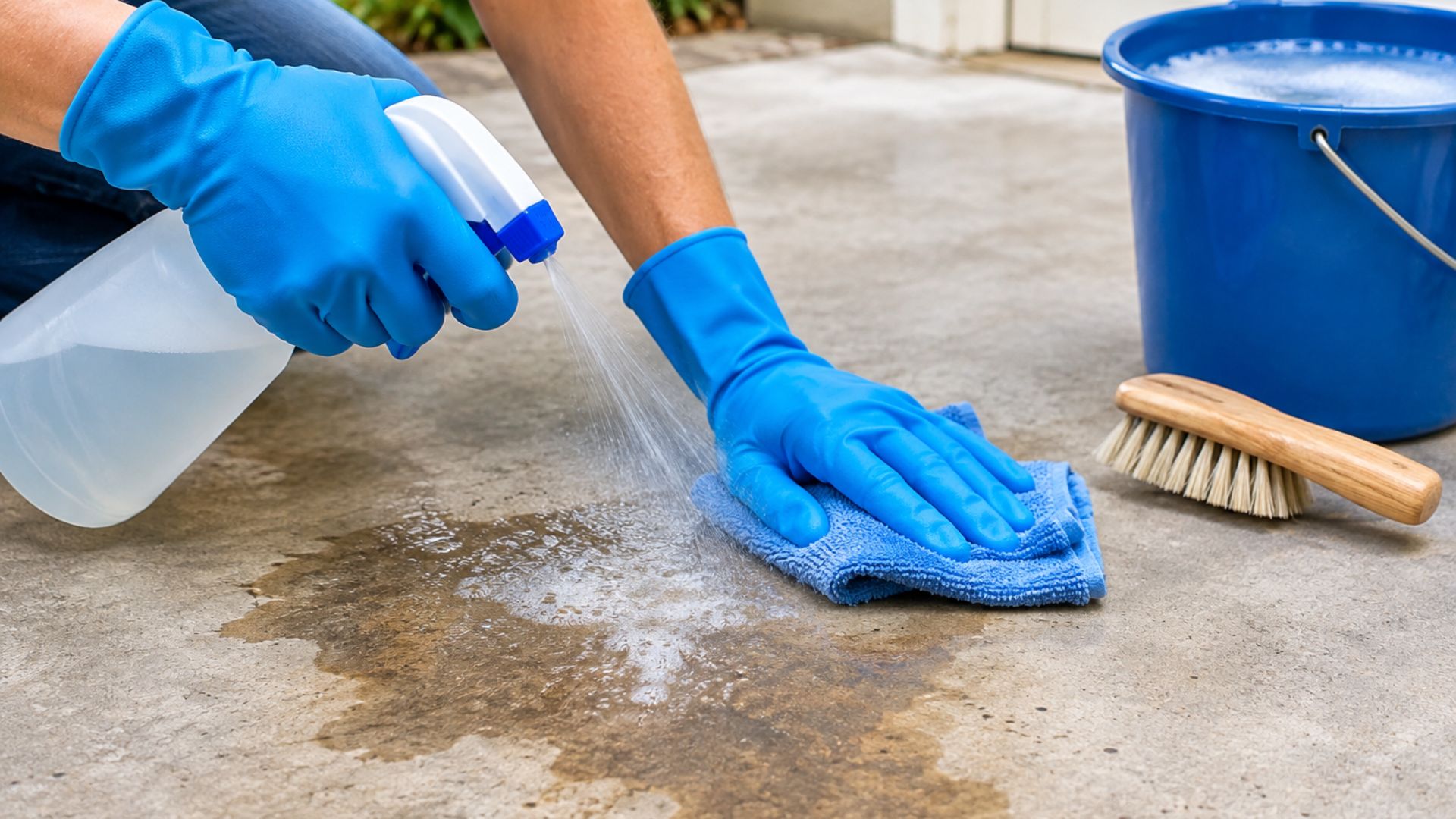
Concrete looks tough. And it is – until something spills on it.
Whether it is an oil drip in your garage, a rust ring from a metal planter, or a mystery stain on your patio, concrete has a way of absorbing everything fast. That porous surface that makes concrete so durable is also what makes stains so stubborn once they sink in.
The good news is that most stains can be removed – or at least significantly reduced – if you act quickly and use the right approach. The bad news is that waiting too long turns a minor cleanup into a major headache.
This guide walks you through what works, what does not, and when it makes sense to call in a professional.
Why Concrete Stains So Easily
Concrete may look solid, but unless it is sealed, it contains tiny pores. When a liquid hits it, that liquid does not just sit on top. It gets pulled down into the material almost immediately, like a sponge.
This is why the type of stain matters as much as how fresh it is. Oil and grease bond with the concrete at a chemical level. Rust eats into the surface. Organic stains like leaves, food, and mildew feed on moisture and spread over time.
Understanding what you are dealing with is step one, because the wrong cleaner can actually make a stain worse or push it deeper.
Act Fast: The Most Important Rule
If you take nothing else from this article, take this: speed is everything with concrete stains.
The first few minutes after a spill are your best window. Blot up as much of the liquid as possible using old rags, paper towels, or even cat litter for thick substances like oil. Do not rub – that just spreads the stain outward and works it in deeper.
Once you have absorbed what you can, rinse the area with water if the stain is water-soluble. For oil-based spills, skip the water initially – it can seal the stain in rather than help lift it.
How to Remove Different Types of Concrete Stains
Not all stains respond to the same treatment. Here is a breakdown of the most common types and how to tackle each one.
Oil and Grease Stains
Oil stains are probably the most common concrete problem, especially in garages and driveways. Fresh oil can often be pulled out of the concrete using an absorbent material like baking soda, cornstarch, or commercial kitty litter.
Cover the stain generously and let it sit for at least 30 minutes – overnight is even better. Then sweep it up and scrub the area with a stiff-bristled brush and a degreasing dish soap or a dedicated concrete degreaser. Rinse thoroughly.
For older or set-in oil stains, you may need a poultice – a paste made from an absorbent material mixed with a chemical solvent. The paste draws the oil out of the concrete as it dries. Apply it, cover with plastic wrap, and let it sit for 24 to 48 hours before removing.
Rust Stains
Rust on concrete comes from metal objects left sitting on the surface – tools, planters, furniture legs, and even fertilizer bags with iron in them. These stains have a distinctive orange-brown color and can look alarming.
Avoid bleach on rust stains. It does nothing useful and can actually deepen the discoloration. Instead, use an oxalic acid-based cleaner or a commercial rust remover rated for concrete. Apply it, let it penetrate for 10 to 15 minutes, scrub with a brush, and rinse well.
For lighter rust stains, lemon juice or white vinegar may work when left on the surface for 10 minutes before scrubbing. These are milder options that work best on newer stains.
Organic Stains: Mold, Mildew, Algae, and Leaves
Organic stains are extremely common on outdoor concrete surfaces in Texas, where heat and humidity create perfect conditions for mold and algae growth. These stains tend to be green, black, or brown and often feel slippery underfoot.
A mixture of water and white vinegar can work on mild mold or mildew. For heavier buildup, a diluted bleach solution (one cup of bleach per gallon of water) is more effective. Apply it, let it sit for 10 minutes, scrub, and rinse completely.
If you are dealing with leaf stains or tannin staining from wood or plant material, an oxygenated bleach product (not chlorine bleach) tends to work better without damaging nearby plants or soil.
Paint Stains
Catching paint while it is still wet gives you a real advantage. Scrape up as much as possible with a plastic scraper, then use warm soapy water to clean the rest. For latex paint, this is often enough if done quickly.
Dried paint is a different story. For latex, a commercial paint stripper or a pressure washer with hot water may be necessary. For oil-based paints, you will need a chemical paint remover appropriate for concrete surfaces – always follow the product instructions carefully and test on a small area first.
Tire Marks
If you have ever noticed dark skid marks on a driveway or parking area, those are rubber deposits from tires – not exactly stains, but just as unsightly.
A concrete degreaser or a commercial cleaner specifically formulated for tire marks is your best bet. Apply, let it dwell for a few minutes, scrub with a stiff brush, and rinse. Pressure washing often finishes the job well on tire mark residue.
Cleaning Products That Actually Work
You do not need a cabinet full of specialty chemicals to clean most concrete stains. These are reliable go-to options:
- Dish soap or liquid degreaser – great for fresh grease and oil spills
- Baking soda – useful as an absorbent for fresh oily spills and as a mild abrasive scrub
- White vinegar – mild acid that works on mineral deposits, light rust, and mold
- Hydrogen peroxide – effective on organic stains, food, and some rust stains without the harshness of bleach
- Oxalic acid cleaners – best for rust and mineral staining, available at hardware stores
- TSP (trisodium phosphate) – powerful cleaner for grease, grime, and stains on larger surfaces; use with gloves and eye protection
- Commercial concrete degreasers – formulated specifically for porous surfaces and tough oil stains
If you prefer a more eco-conscious approach, hydrogen peroxide and oxygenated bleach cleaners are generally lower-risk options for surrounding vegetation and groundwater.
Pressure Washing: When to Use It
A pressure washer is one of the most effective tools for concrete cleaning – but it is not always the first step.
For surface-level grime, algae, loose dirt, and older light stains, pressure washing can do an impressive job on its own. But for deep-set stains, it works better as a finishing step after a cleaning product has had time to penetrate and loosen the stain.
Using a pressure washer incorrectly – at too high a pressure or too close to the surface – can actually etch or damage the concrete, especially older or weaker surfaces. Keeping the nozzle 12 to 18 inches from the surface and using a wide-angle tip (25 to 40 degrees) is generally a safe range for most residential concrete.
For large areas like driveways, patios, and sidewalks, professional pressure washing often delivers better, more even results with less risk of surface damage. Peace Frog Specialty Cleaning offers pressure washing services for Austin-area homeowners who want the job done right the first time.
Common Mistakes That Make Concrete Stains Worse
A few missteps people make when trying to clean concrete on their own:
- Using the wrong cleaner. Bleach is not a universal solution. It can damage sealed concrete, harm nearby landscaping, and do nothing for oil or rust stains. Always match the cleaner to the stain type.
- Scrubbing before absorbing. On fresh liquid spills, scrubbing immediately can spread the stain and work it deeper. Blot or absorb first, then scrub.
- Skipping a rinse. Leftover cleaning product residue can attract more dirt or leave a chalky film on the surface. Always rinse thoroughly after cleaning.
- Waiting too long. The longer a stain sits in porous concrete, the more it bonds with the material. What could have been removed in 20 minutes might take hours – or professional equipment – to lift a few days later.
When to Seal Concrete After Cleaning
Once you have cleaned a stain, it is worth thinking about whether sealing the concrete makes sense. A quality concrete sealer creates a barrier over those pores, making future spills much easier to clean before they ever have a chance to stain.
Sealers come in penetrating formulas (which soak into the concrete and protect from within) and topical formulas (which sit on the surface and create a visible sheen). Penetrating sealers are generally better for driveways and areas with heavy traffic or vehicle use.
The concrete should be fully clean and dry before sealing – ideally a minimum of 24 to 48 hours after cleaning, depending on weather conditions.
When a DIY Approach Is Not Enough
Sometimes a stain has simply been there too long, gone too deep, or is covering too large an area to manage with household products and elbow grease. This is especially true for large driveways, commercial concrete surfaces, or staining that has been sitting for months or years.
Professional cleaning services use commercial-grade equipment and specialized solutions that penetrate more deeply and remove material that consumer products cannot touch. If you have tried the DIY route and the stain is still clearly visible, that is a reasonable point to bring in a professional.
It is also worth calling a pro when the concrete surface itself seems damaged, discolored unevenly, or shows signs of efflorescence – the white, chalky residue that forms when water carries salts to the surface. That can require a different approach altogether.
Frequently Asked Questions
How long does it take for a concrete stain to become permanent?
It depends on the stain type and the porosity of the concrete. Oil can begin bonding within hours. Rust can stain permanently within days if left untreated. Organic stains like mold take longer but become much harder to remove once they penetrate deeply. As a general rule, treat any spill on concrete within the first 24 hours.
Can I use bleach on concrete?
Bleach can be effective on organic stains like mold, mildew, and algae. It is not effective on oil, grease, rust, or paint. Bleach can also discolor or damage sealed concrete and should be kept away from plants, soil, and storm drains. Use it diluted (never full strength) and rinse completely.
Is it safe to pressure wash all types of concrete?
Most concrete surfaces can be pressure washed safely, but older, weaker, or decorative concrete may be vulnerable to etching or surface damage at high pressure. Use a wide-angle nozzle, keep an appropriate distance from the surface, and avoid directing pressure at cracks or seams.
Will a concrete stain always come out?
Not always. Very old stains, stains that were sealed over without being cleaned first, and certain chemical stains can be permanent or only partially removable. In many cases, professional equipment can improve the result significantly even when DIY methods have failed.
Does sealing concrete prevent all stains?
Sealing significantly reduces staining by limiting how quickly liquids penetrate the surface. It does not make concrete completely stain-proof, but it gives you much more time to clean up spills before they cause damage. Re-sealing every one to three years helps maintain that protection.
Act Fast to Remove Concrete Stains
Concrete stains do not have to be permanent – but timing and technique matter. Acting fast, using the right product for the stain type, and rinsing thoroughly are the fundamentals that make the biggest difference. When the stain is too stubborn for a DIY fix, professional help is a smart call. For homeowners and businesses in Austin and the surrounding area, the Peace Frog team offers expert pressure washing in Austin, TX to handle tough concrete staining with the right equipment. Call 512-259-6606 or 512-547-7052 to schedule your service.